The Hand is the Instrument of Intelligence
Why Today's Kids Need to Be Makers
By Tricia Bell, Lower Elementary Guide
Friday, July 31, 2026
These days, the term “being a maker” often refers to a subculture of hobbyists—artists and crafters of all kinds, tinkerers who enjoy inventing or repairing useful gadgets, and tech enthusiasts who build or program objects by hand (think STEM pursuits like 3D printing or robotics).
Sure, you may detect a geeky ring to the phrase. It’s been called a movement. But subcultures and movements aside, being a maker is simply being a person who engages in creating things, usually with their hands (though arguably, wordsmiths and mathematicians are makers, too!). This “making” usually refers to project-based learning that encourages imagination, experimentation, and the integration of different concepts.
And being a maker is very, VERY Montessori.
Physical, sensorial immersion in learning is a crucial element of Maria Montessori’s genius—an insight gained from a lifetime of scientific observation and study of human development.
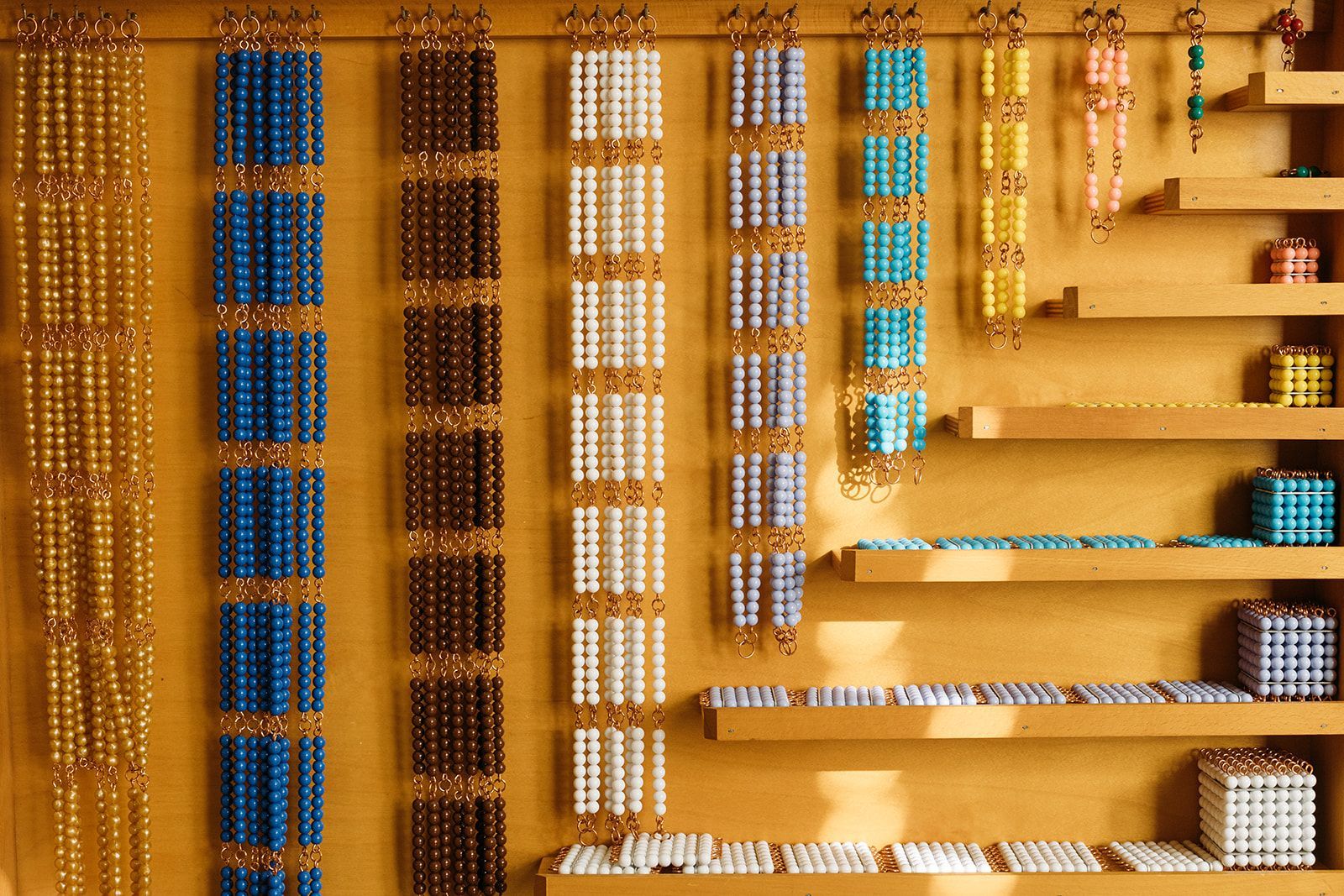
While Dr. Montessori noted that early childhood (between ages 2 and 6) is a sensitive period for sensorial learning, her pedagogy emphasizes learning through sensorial immersion at every stage of development. For example, in elementary classrooms, students continue using golden bead materials to physically feel the weight and scale of decimal place value. Language skills are experienced through sandpaper and wooden alphabets, the arrangement and rearrangement of word cards, and grammar concepts transformed into color-coded three-dimensional symbols. Adolescents in Montessori programs apply academic concepts directly to tangible tasks like testing water chemistry, building structures in land labs, and managing real financial budgets as they run their own micro-businesses.
In her book, The 1946 London Lectures (page 36), Montessori wrote:
"Movement of the hand is essential. Little children revealed that the development of the mind is stimulated by the movement of the hands. The hand is the instrument of intelligence. The child needs to manipulate objects and to gain experience by touching and handling."
I believe this last sentence bears repeating:
The child needs to manipulate objects and to gain experience by touching and handling.
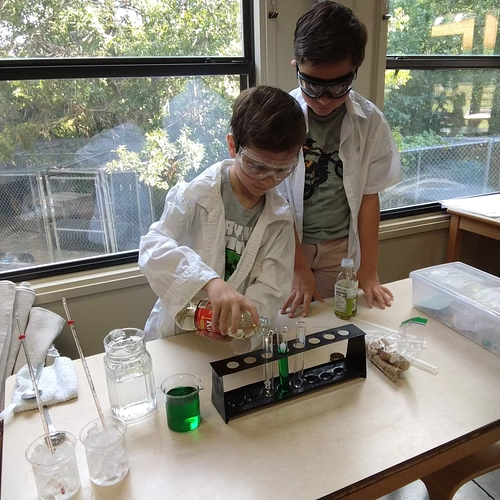
There is so much to unpack here! When we engage in purposeful activity through our hands, we gain proprioceptive intelligence—insight about texture, spatial awareness, force, and temperature. We notice details and patterns. But the benefit of working with our hands reaches much deeper; it is of primal significance.
Looking back throughout human history, we see how we have evolved through our handiwork. The seemingly simple acts of molding pots out of clay earth, weaving plant matter into textiles, or building with stone have taught us to discern physics, chemistry, and algorithms.
In The Absorbent Mind, Montessori wrote:
"All the changes in man’s environment are brought about by his hands. Really, it might seem as if the whole business of intelligence is to guide their work." (Montessori, 1964)
Consider the gathering, organizing, planning, and problem-solving involved in the making of… anything. Think of the reward feedback loop of making something useful (or just delightful). It is not instantaneous; one might work for days or months to see the fruit of one’s labor.
Scientific data continues to build evidence of the essential connection between the hand and the brain.* Montessori understood this long before modern neuroscience began confirming it. When children create with their hands, they are doing far more than producing a craft project. They are strengthening attention, planning, coordination, spatial reasoning, self-control, and perseverance. Hands-on activities engage multiple brain systems involved in learning, memory, and executive function, while opportunities for independent problem-solving help children develop resilience and confidence (Montessori, 1949/1967; James & Engelhardt, Trends in Neuroscience and Education, 2012; Diamond, Annual Review of Psychology, 2013).
Yet there’s a huge need in our digital world to get kids more engaged in working with their hands in their everyday lives. With the endless lure and distraction of digital media, today’s children seem to have fewer opportunities to build, make, and create purposefully and independently with their hands than did children of past generations.
The concept of being a maker is especially dear to my heart, not only because of my experience as a Montessori teacher, but also because of my own childhood growing up in the 1970s and 80s. My mother was the quintessential maker—an artist and nature educator who inspired me through example and her own love of bringing ideas to life. She was a potter, master basket weaver, playhouse builder, pond digger, felter, painter, chef, and incredible hostess (honestly, this list barely brushes the surface of her talents and accomplishments!). She did not coddle my sister and me with instruction and attention, but would show us what was possible and explain the basics.
There were stacks of kid-friendly cookbooks around the house and a fantastic collection of craft and activity manuals to show us how to make a full sized hammock out of recycled plastic six-pack rings, homemade playdough, or a sundial that could really tell time. I remember making cottage cheese from scratch (a.k.a. “curds and whey,” like what Little Miss Muffet ate while sitting on her tuffet). Ask another Gen X-er if they remember Steven Caney’s incredible books, like Kids America, the Toy Book, or the Invention Book, which essentially taught us how to make our own toys, or almost anything else.
Ahh, those, indeed, were the good old days! My friends and I published magazines, and designed costumes, sets, and scripts for magic shows. We built an amusement park in our driveway for the neighborhood kids (and a few booby traps, too). Those aren't just happy memories—they shaped who I became.
Making all manner of things, and making my own fun, taught me something much bigger than how to make a proper pillow fort or bake the perfect banana meringue pie. They taught me that I was capable, creative, and resourceful.
I am saddened and frustrated when I hear adults say, “Oh, I’m not the creative type.” I want to show them that they can be, and that it is absolutely worth taking the time to explore this side of themselves.
My love of making things has a lot to do with my decision to become a teacher. One of my greatest joys in the classroom is watching children express their learning as they acquire new skills and discover the satisfaction of creating something entirely new, meaningful, and beautiful. This is where imagination meets perseverance, and where confidence quietly begins to grow.
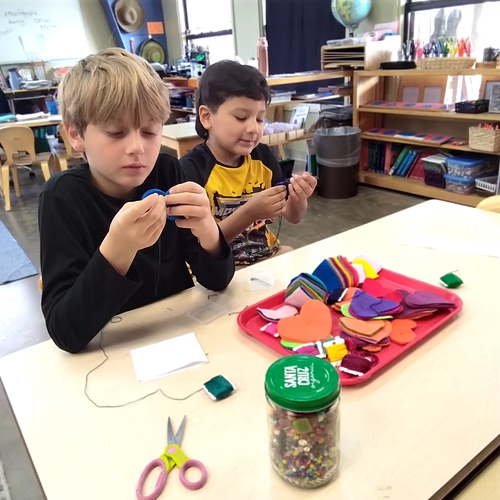
Lately, though, I've noticed a trend that concerns me. Many children give up all too quickly when they encounter a small obstacle. A thread tangles while sewing. A cardboard structure collapses. Instead of taking a closer look, experimenting, trying again, or asking themselves, "What else could I try?", many simply stop and say, “Ms. Bell, I need your help.”
As a teacher, it is painful to observe children assuming helplessness.
Of course, I don't expect young children to know how to do everything. They're learning! But I do hope they'll develop the belief that "I can figure this out." That mindset doesn't magically appear. It grows through practice, through trial and error, and through having lots of opportunities to work with their hands.
Surely, this is one of the wonderful reasons why families choose Montessori. Independence isn't simply about putting on your own coat or pouring your own juice. It's about believing, "I am capable. I can try. I can solve problems."
So how can we nurture more of a “maker” spirit at home?
Invite your children into everyday life. Let them help cook—even if it makes the kitchen a little messier. Teach them to sew on a button. Build a fort. Plant a garden. Hammer a nail. Fold laundry. Tie knots—tie their own shoes! Please teach your child to tie their own shoes (who needs Velcro?). Make birthday cards instead of buying them. Create with cardboard boxes, string, tape, and imagination. Resist the urge to step in the moment something becomes difficult. Resist the urge to turn on the screen. Sometimes the greatest gift we can give a child is simply to struggle through the discomfort of boredom.
When they say, "I can't," answer with an observation and shared curiosity: "I see you’re not there yet. You’re working on it. What have you tried so far?”
Our children don't need everything they make to be perfect. There are so many skills you can never learn until you fail first (maybe until you fail the second and third time). They need opportunities to make, to be curious about their failures, to try again, and to discover the incredible feeling of creating something with their own two hands.
When children become makers, they are not just making “arts and crafts.” They are building confidence and resilience. They are developing focus, attention to detail, and pride. They are making themselves into people who believe they can shape the world around them.
To me, that's one of the greatest gifts we can give a child—and one of the things that truly makes life worth living.
And I promise—teaching your child how to tie their own shoes teaches them a whole lot more than just how to tie a shoe!
*Below are a few links to interesting articles on the neurobiology of the hand-brain connection!
Why Hands-On Learning Boosts Brain Power
Why Writing by Hand Is Better for Your Brain
Young Children's Interactions with Objects: Play as Practice ...
The Science Behind Hand-Brain Connection
The Neuroscience of Making: Why Your Hands Matter More Than You Think