Montessori Education Week
The History of Dr. Maria Montessori
By Brenda Huth, Head of School
Friday, February 27
In honor of Montessori Education Week, we’d be remiss not to reflect on Dr. Montessori’s life and her profound influence on how we see and honor children’s potential.
Dr. Montessori was first and foremost a scientist. In fact, Dr. Montessori was one of the first female physicians in Italy in the late 19th century. Specializing in pediatrics and psychiatry, she had regular contact with working-class and poor children through free clinics at the University of Rome’s medical school. Through these initial experiences, Dr. Montessori theorized that children are born with incredible innate learning potential and intrinsically a deep desire to explore, discover, and learn about their world.
In 1900, she was appointed Director of a University of Rome program for developmentally delayed children considered uneducable. After observing the abhorrent conditions of the institution and the children’s attempts to find anything of sensory interest, Dr. Montessori began studying the importance of sensory stimulation in cognitive development.
Eventually, after two years of working with infirmed children and their teachers, Dr. Montessori’s developmentally delayed students were able to pass the standardized tests of Italian schools. This led her to question that if children with developmental challenges could pass the tests, what were traditional schools of the time doing in order to get dramatically better results with typically developing children!
We have to remember that the early 1900s were dramatically different times. Children were to be seen and not heard, looked upon as “mini-adults”, and child-sized learning materials or furniture weren’t the norm. This type of thinking was considered radical. This successful experience caused Dr. Montessori to want to examine how education could support, rather than stifle or repress, children’s development.
In 1907, Dr. Montessori had her opportunity. She was invited to coordinate daycare for children too young for public schools in the slums of San Lorenzo. These children were from working class families and were often left alone during the day to run the neighborhoods while their parents worked.
Dr. Montessori began by teaching the older children how to help with everyday tasks. She also introduced practical skills of everyday living, including care of self and hygiene. Gradually, Dr. Montessori incorporated manipulatives and activities to assist children with learning different academic skills and concepts. The children were drawn to the materials and reveled in the process of care of self and care of their environment. Each day the children’s behavior improved, and they eventually begged her to show them more, including how to read, write, and complete complex mathematical operations.
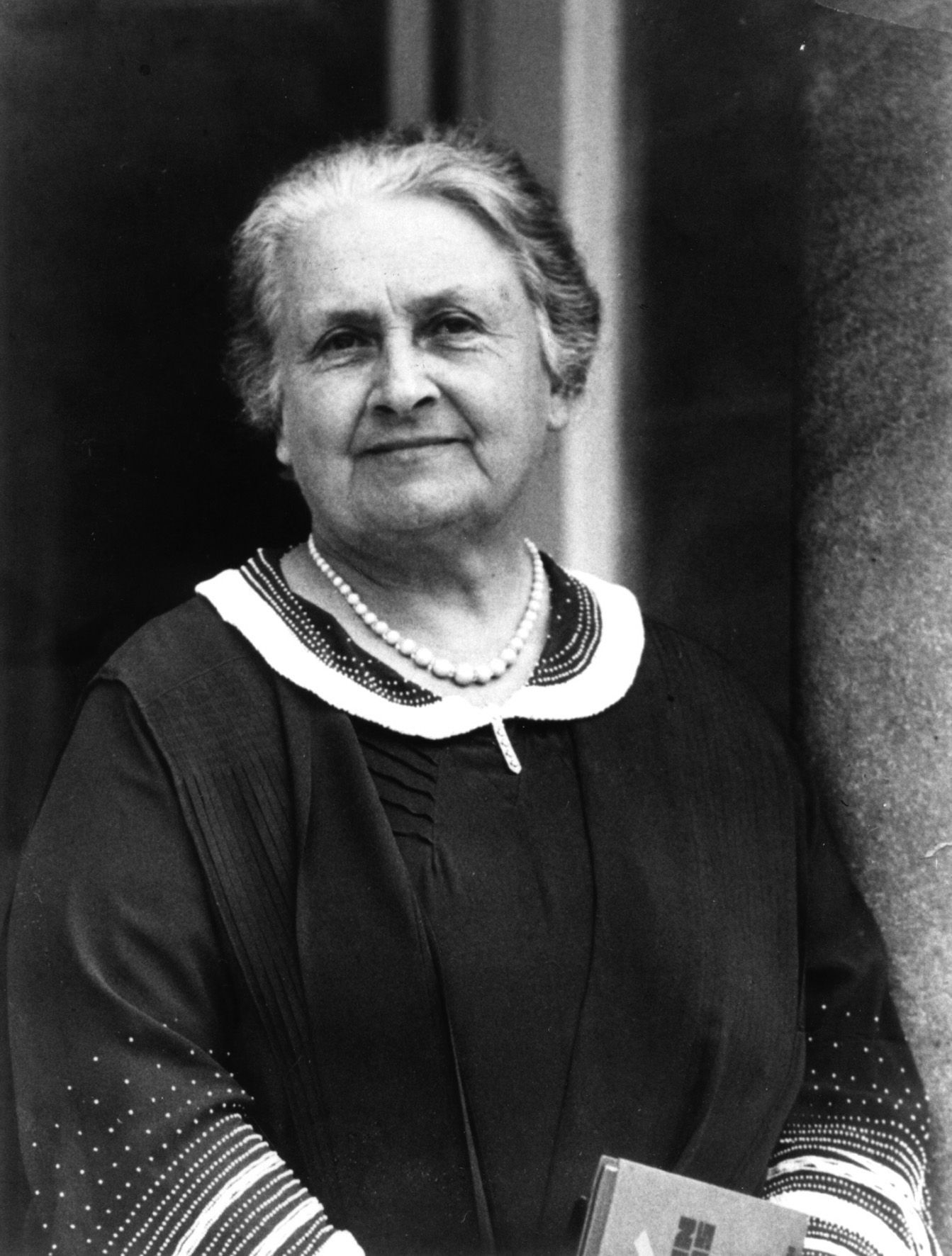
As she prepared the space and the Guides supporting these previously unkempt, unruly, and uneducated children, Dr. Montessori saw an incredible “normalization” and seemingly spontaneous kind of learning and work happen. The children became calm, peaceful, kind, collaborative, and knowledgeable. They took care of themselves and their environments and developed sustained concentration and a love of learning. On January 6, 1907 the first Casa dei Bambini (Children’s House) opened in the San Lorenzo district of Rome. The school is still in operation today.
Dr. Montessori was fascinated, observed, and took copious notes capturing the transformation of the children. She continued to experiment and design unique learning materials that nurtured the children’s natural desire to learn and demonstrated interests. News of this success in San Lorenzo soon spread. Local Italian and eventually dignitaries from other countries began visiting to see the previous “feral” children's transformation firsthand.
Around age 40, Dr. Montessori left her physician career and a professorship at the University of Rome to continue her studies of children. Her personal life was filled with World Wars, change in political climates, and the birth of her son, Mario Montessori. Because of her marital status (she was unwed) and possible scandal, Dr. Montessori was forced to choose between her career and her son. Mario Montessori was raised by a foster family in rural Italy with occasional visits from his mother. She was reunited with her son in 1913 when he was 15 years old. Thereafter, he never left her side and was considered a lifelong confidant and carried her legacy after her death.
Dr. Montessori along with Mario fled Italy in 1934. She was forced to leave due to her vocal opposition to Mussolini’s fascist regime and her refusal to align her schools with the fascist youth movement. Following her departure, she moved to Barcelona, Spain, before relocating to the Netherlands in 1936. While on a lecture tour in India in 1939, she was interned as an "enemy alien" after Italy entered World War II. She remained in India, given political asylum, for the duration of the war before eventually returning to the Netherlands.
Through scientific investigation, the study of available research, trial and error, and observation, Dr. Montessori saw that children across cultures and countries flourish in a setting that provides trained Guides, just the right support at critical times of development, and a prepared environment that allows for following children’s readiness and interests. The prepared environment provides a synergetic community where development of the whole child; physical, social, emotional, and cognitive is possible based on both individual and community needs.
Because quality Montessori education is focused on the science of human development, the approach has withstood the test of time and culture. Today the Montessori approach has been implemented in approximately 20,000 Montessori schools around the world, with more than 3,000 in the U.S. alone. Montessori schools can be found in both public and private educational settings. With over 100 years of practice, high-fidelity Montessori has worldwide recognition as a pedagogical educational approach that helps children achieve their fullest potential.
February 22, 2026
Brenda Huth
Resource: Maria Montessori: Her Life and Work by E.M. Standing