Risky Business

By Steven Vasquez, WRM Physical Education Specialist/Coach

Thursday, April 2, 2026


What is
Risk? As defined by Merriam Webster Risk is : “the possibility of loss or injury.” Now I really want to hang on what I personally take as the operative word in that definition: “possibility”. 


Life is full of many possibilities. There is a chance that you will win the lottery if you play. There is a world in which some still living creature becomes unfrozen from the melting ice in Siberia. There is even the astronomical outcome that , as you read these very words, you're struck by a meteorite. Are any of these events likely? Not in the slightest. And that assertion is supported by data.


How do we get that data? As adults we take many risks in our lives. Sometimes those risks are small (“I can definitely make it there on time!”) And sometimes those risks are larger (making personal finance moves).  And we feel correct in taking those risks because, after all, we have a wealth of information to draw from do we not? However, that information is derived in a circular fashion. We only came to the conclusions that we have drawn through guesswork and failure… aka: Risk. It should be seen as somewhat of a privilege to be taking risks. Do we bestow that same privilege to those younger than us?


Personally, I do not think that we should award our adolescents/children the same depth of trust that we give ourselves to make mistakes. We believe that our risks have a higher chance of actually working out because of our breadth of experience. Truthfully, these children don't have that same repository of information to utilize. However, that is not to say that they have nothing to reference. Even someone as young as 8 has led a life. They have experienced hardships and happiness and have learned through trial and error. It is our position as the adults of the situations, and especially those in the educator position, to have a cultured experience of choice in risk based on the child’s development. Presenting challenging situations that, to the best of our planning and knowledge,
cannot go catastrophically or painfully awry. 
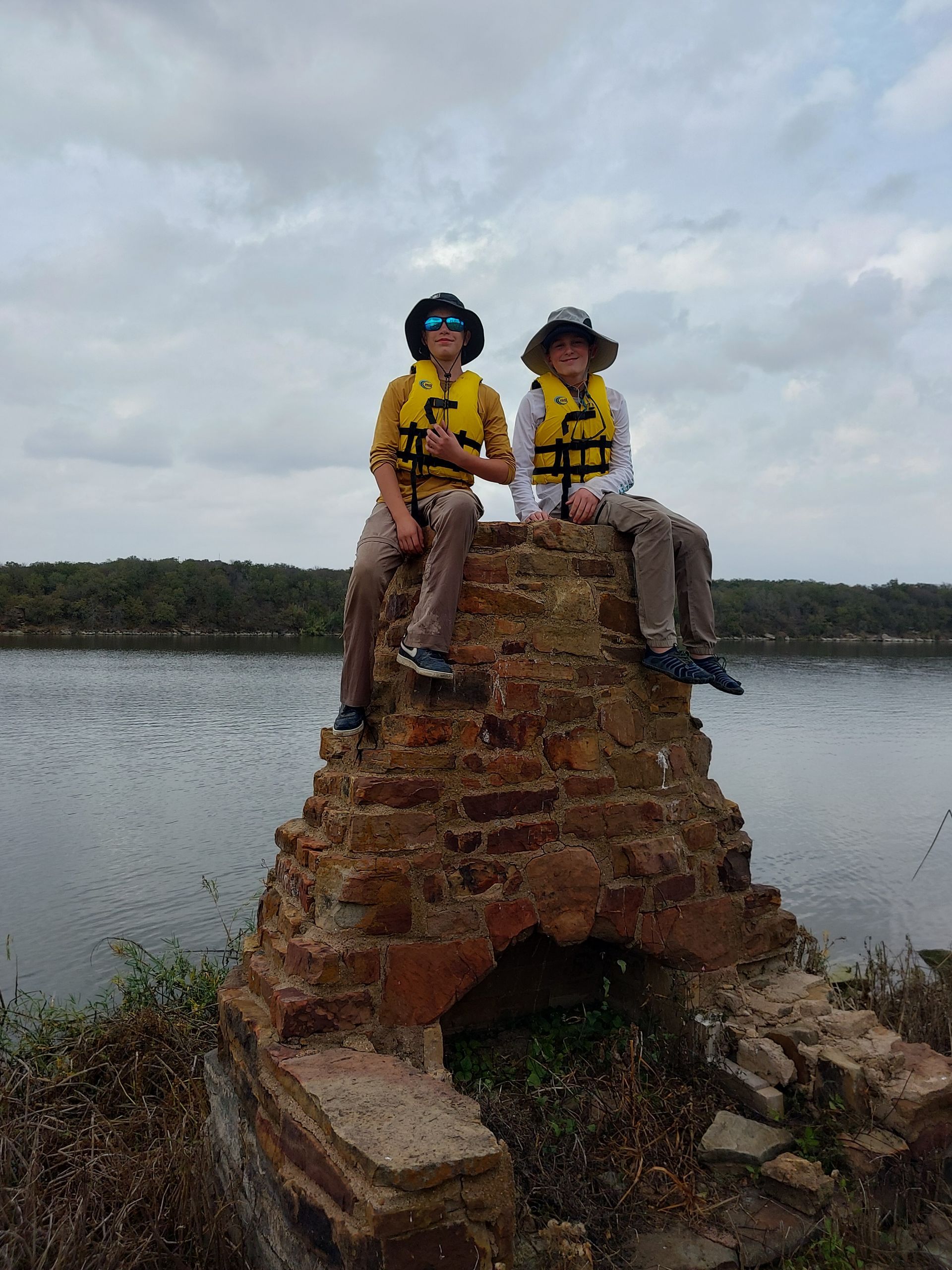
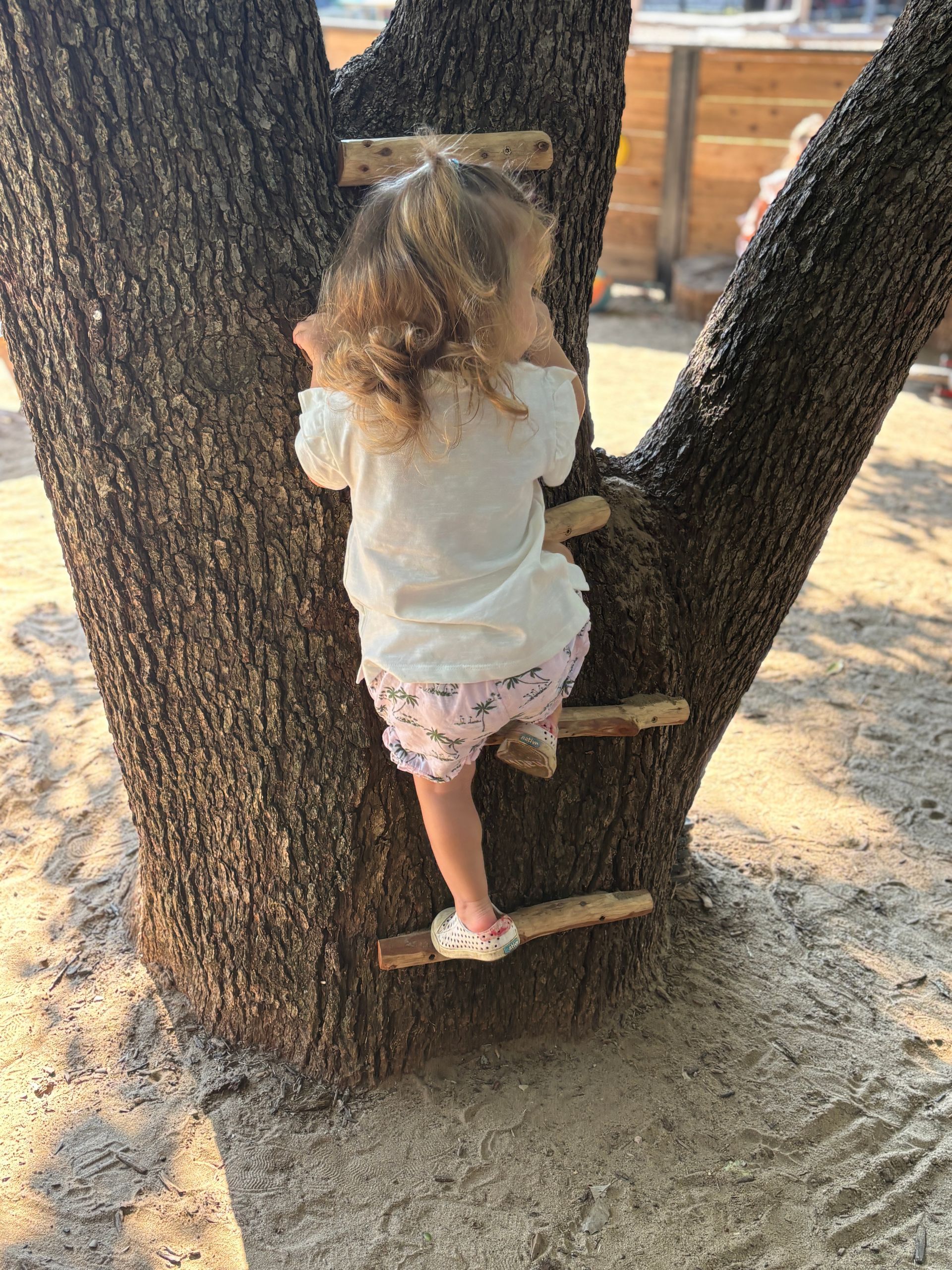
So, why? Why give those children and adolescents those experiences? For one, of course, it is important to look at a risk as an opportunity to learn and in multiple ways. First I would like to point to a 2025 review of a 2015 study named “Position Statement on Active Outdoor Play” that looked at, unsurprisingly, outdoor play and its effects on developing humans. In the subsection,  “Evidence Statement 3: Risky Play” we see that the effects are thus: “Among children, risky play—such  as climbing, rough-and-tumble activities, or exploring unknown terrain—allows them to test their physical limits, manage fear, and develop risk perception skills that are critical for safety and resilience [3, 69–71].  These experiences are not just physically engaging; they also enhance children's confidence, resilience, and problem-solving capacities [3, 57, 72], while promoting their agency, well-being, and physical literacy [73–75].” What more can be said about these findings? Honestly not much, they're very direct. They are also effects that can clearly be seen. While this study did specifically look at outdoor play, let's recognize that not all of us have access to the areas in which this study was taking place. So I think it's important to find the little ways in which these same sorts of scenarios can be fostered in everyday life. Let them pour their own milk that is, honestly, probably a little too heavy for them. Let them try cutting the strawberries for a salad or snack. Let them try cleaning up the bathroom or use a tool. Because the outcomes are 10 fold and wind up preparing themselves for the future.

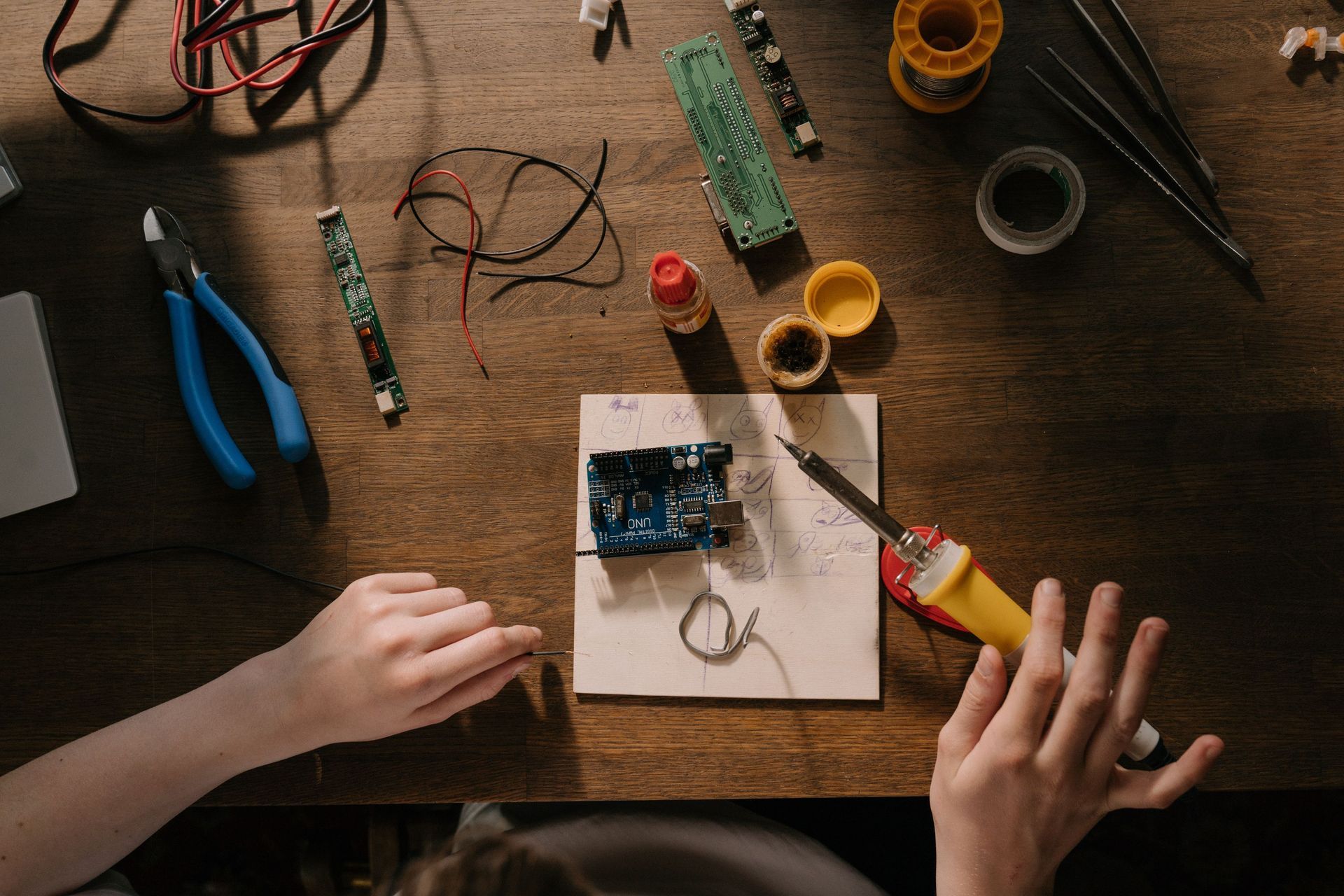
One thing that I also see in my personal life that was not covered by any studies that I have read is the effect on trust. I want you to imagine that you're the age of 10. You have been sitting on the sidelines watching someone do some woodworking and hammering something together. Then they call you over and hand the hammer to you beckoning you to learn. How do you think you would feel toward that person? How would you see their trust toward you shape your future decisions? Would you feel more comfortable asking them questions?  How would you repay their trust?


To summarize, calculated risks lead to many rewards. They help us learn about our personal limitations, whether they be physical or mental. They help us expand our sense of possibilities. They help us to plan better in the future should something not go according to plan. They also help build and lend trust to others. Calculated risks help us feel accomplished and give us a sense of agency in the world. With that, I hope that we can all take a little time to take a little more assessed risks in our lives. 


References

Lee, Eun-Young, et al. “2025 Position Statement on Active Outdoor Play.” International Journal of Behavioral Nutrition and Physical Activity, vol. 22, no. 1, 20 Nov. 2025, pp. 147–147, https://doi.org/10.1186/s12966-025-01854-0.

By Brenda Huth February 27, 2026
The History of Dr. Maria Montessori By Brenda Huth, Head of School Friday, February 27
By Maria Montes February 11, 2026
Bringing the Cultural Curriculum to Life in Primary By Maria Montes, Primary 1 Lead Teacher Wednesday, February 11, 2026
By Regina Swerts January 5, 2026
By Regina Swerts, WRM Lower Elementary Guide Friday, January 16, 2026
By Kim Mason and Maria Montes January 5, 2026
More than Reading - A Seasonal Invitation to Connect as a Family
By Kat Gamber December 12, 2025
Why Outdoor Education is Essential
By Jane Brass November 30, 2025
By Jane Brass, WRM Upper Elementary Guide Sunday, November 30, 2025
By Rob Lewicki October 23, 2025
By Rob Lewicki, Upper Elementary Guide Thursday, October 23, 2025
By Lisa Strykowski September 18, 2025
By Lisa Strykowski, Primary Guide Thursday, September 18, 2025
October 1, 2021
Maria Montessori based her entire educational philosophy on the idea that children developed through a series of four planes. Each of these planes is easy to recognize and has clear, defining characteristics. If we study and understand these stages, we can approach our interactions with children with a new perspective.
September 1, 2021
Infants and toddlers may be together or separate, with a toddler classroom serving children 18 months to three years. Primary classrooms are for children ages 3-6, with preschool and kindergarten-aged children together. The elementary years serve children ages 6-12; some schools separate into lower (6-9) and upper (9-12) elementary, while many split elementary into two groups. Even Montessori middle- and high-school students learn in multi-age classrooms. While Montessori is not the only type of education that utilizes this approach, it’s not what most people are used to. What are the benefits of structuring a classroom this way? Read on to learn more... Learning at an Individual Pace Children in multi-age classrooms tend to have a little more flexibility when it comes to mastering skills within a specific timeframe. We know that learning is not linear, and that learners have periods of significant growth, plateaus, and even the occasional regression. In multi-age classrooms, children are typically able to work at their own pace without the added pressure of keeping up with the whole group, or even being held back by the whole group. When children in a classroom range in ages, everyone has someone they can work with, regardless of their skill level. Children don’t feel left behind if they struggle with a concept, and they also don’t feel bored by repetition of something they have already mastered. Teachers who teach in multi-age classrooms typically have deep knowledge for a range of developmental abilities, leaving them well-equipped to differentiate instruction for each individual child. Building Stronger Relationships Traditionally children move from one class to the next each year. This means not only a new set of academic expectations, different routines, and different classroom structures, but a different teacher. In multi-age classrooms teachers have a longer period of time to get to know a student and their family, and vice versa. When teachers really get to know a student, they are able to tailor instruction in regards to both content and delivery. They know how to hook a specific child onto a topic or into a lesson. They know what kind of environment a child needs to feel successful. Parents have an opportunity to get to know teachers better this way, too. If your child has the same teacher for two or three years, the lines of communication are strengthened. Parents get to know the teacher’s style and expectations. The home to school connection becomes more seamless, and the biggest beneficiary is the child. Mentors and Leaders When a child spends multiple years in the same class they are afforded two very special opportunities. Children who are new to the class are fortunate enough to be surrounded by helpful peer mentors. Children often learn best from one another, and they seek to do so naturally. First and second year students watch as the older children enjoy advanced, challenging work, and this inspires them. They look to the older children for guidance, and the older children are happy to provide it. After a year or two in the same room, students have a chance to practice leadership skills. In Montessori classrooms, the older children are often seen giving lessons, helping to clean up spills, or reaching out a comforting hand to their younger friends. The best part is kids make the transition from observer to leader in their own time. It doesn’t happen for all children at the same time, but when it does it’s pretty magical to observe. Mirroring Real-Life There is no other area in life in which people are split into groups with others who are exactly their chronological age. Whether in the family, the workforce or elsewhere, people ultimately need to coexist with people older and younger than themselves. Doing so makes for a more enriching environment, replete with a variety of ideas and skills. Why not start the experience with young children in school? Moving On While staying in the same class for multiple school years has many benefits, a child will eventually transition into a new class. While this can feel bittersweet (for everyone involved!) children are typically ready when it is time. The Montessori approach is always considering what is most supportive of children depending on their development. When formulating how to divide children into groupings, Maria Montessori relied on her ideas about the Planes of Development. There are very distinctive growth milestones children tend to reach at about age 3, another set around age 6, and yet another at age 12. The groupings in our schools are intentional, and they give kids a chance to feel comfortable in their community, while also preparing them to soar forward when the time is right.