The Power And Purpose Of Montessori Materials
By Regina Swerts, WRM Lower Elementary Guide
Friday, January 16, 2026
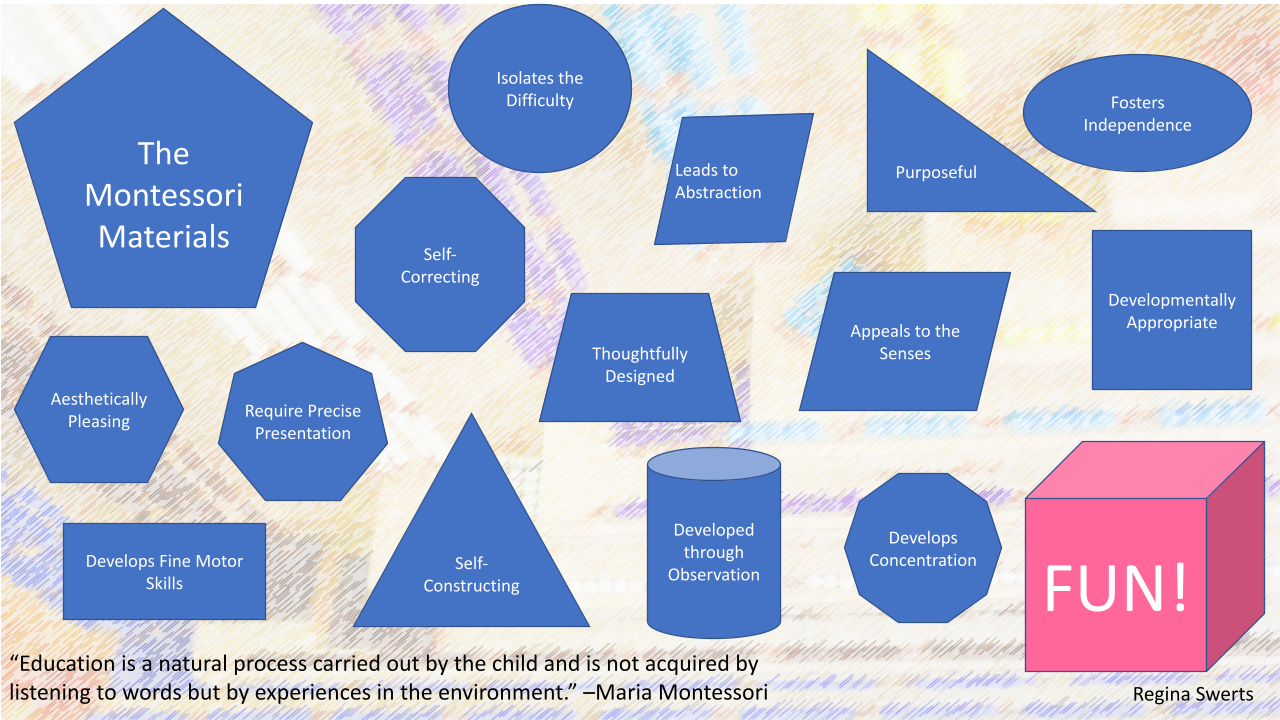
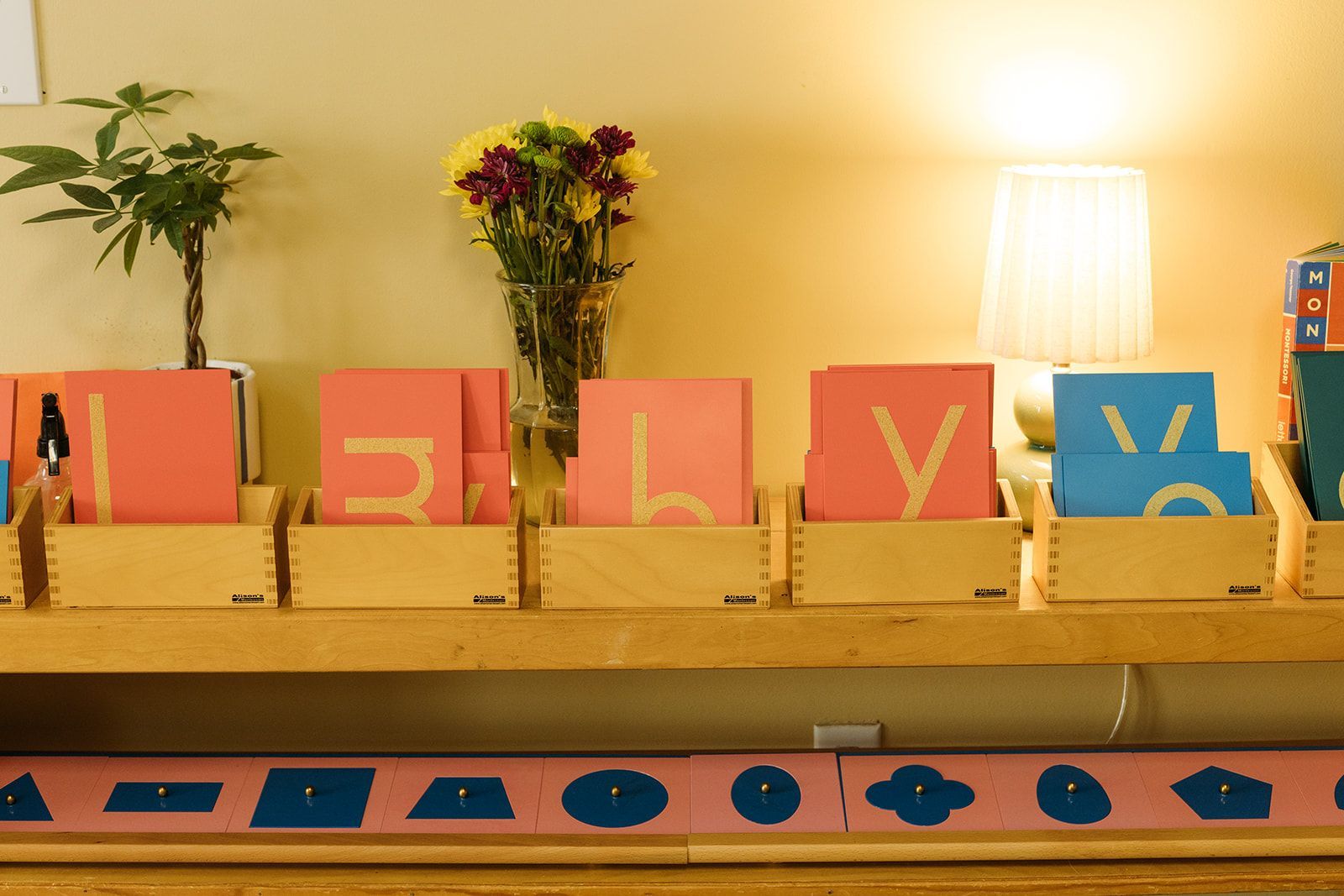
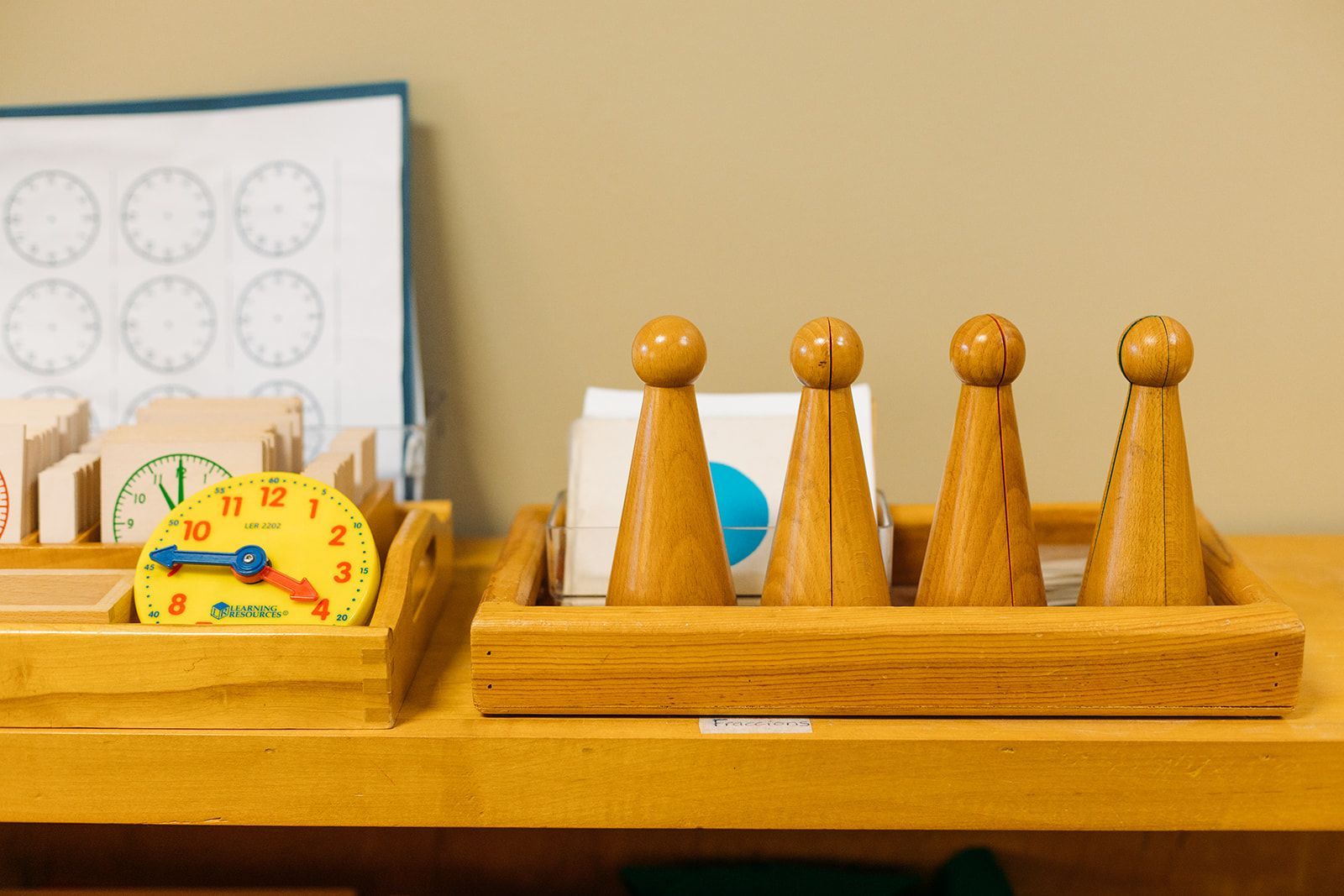
Montessori materials provide the student with the means of making the abstract tangible. By stimulating and engaging all the senses, these materials complete the prepared environment and support the student in the work of self-construction. To be considered a true Montessori material, it must meet specific criteria. These characteristics are reflected in the accompanying graphic.
From the moment I became a Montessori teacher, I knew the materials were both inspired and inspiring. They immediately felt purposeful, and each one clearly designed to support a student’s thinking and independence. The depth of thought embedded in each one continues to amaze me, even after years of working with them. I have spent 15 years as an Upper Elementary teacher and am now in my fourth year in Lower Elementary, and I am still making new connections between the materials and concepts I once encountered in my own traditional education.
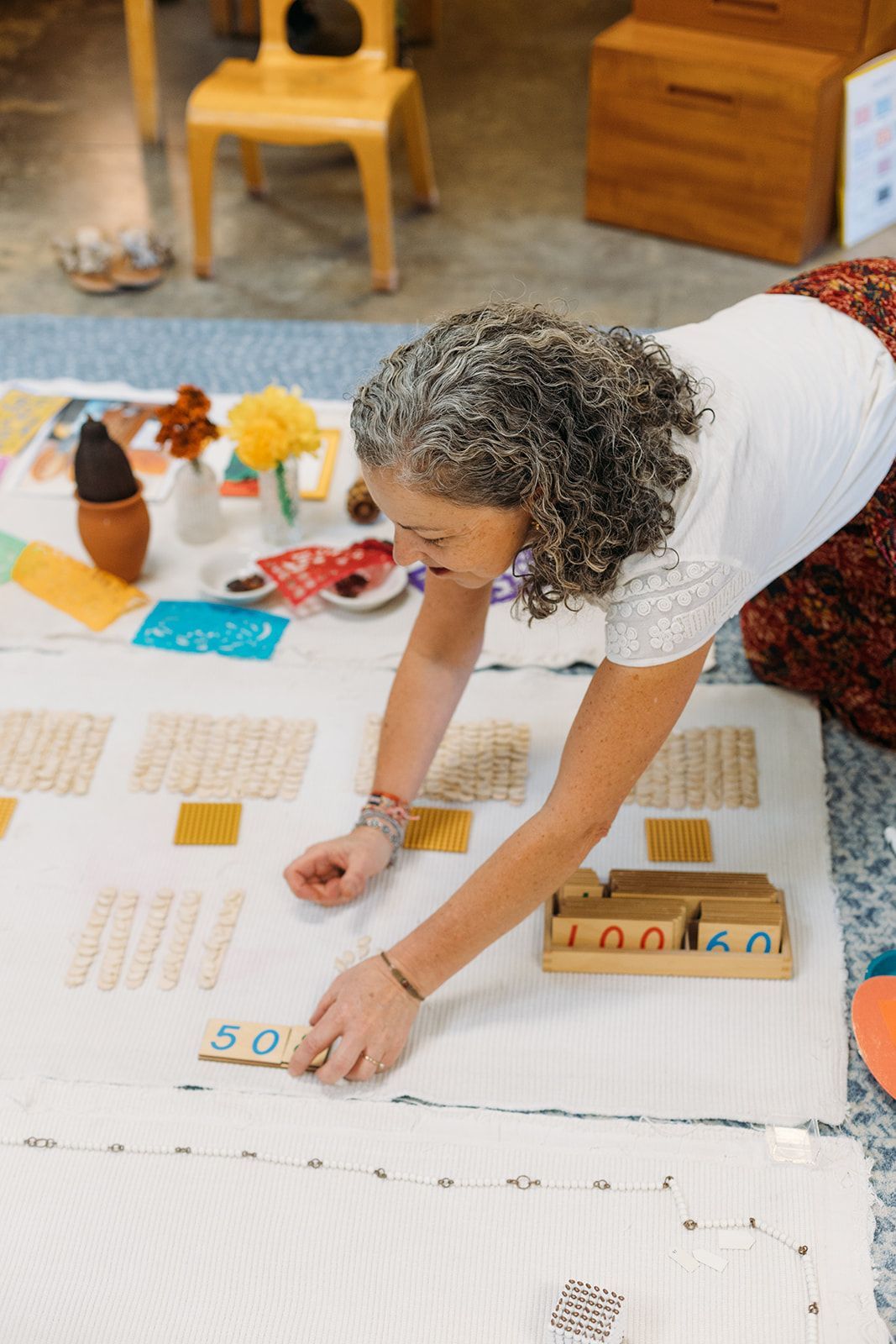
For example, I learned long ago that an isosceles triangle has two equal sides. What I did not fully realize until becoming a Montessori teacher is that it also has two equal angles. The Pythagorean Theorem finally made sense. Why a negative times a negative equals a positive was no longer just a memorized fact. That deeper understanding came not from memorization, but from hands-on exploration. Over time, I have also gained a strong appreciation for the intentional flow of the materials; how one material carefully prepares the student for the next in the sequence. Concepts are revisited and deepened through multiple representations. Multiplication, for instance, can be explored through the Golden Beads, the Stamp Game, the Checkerboard, or the Bead Frame as well as the Bank Game and the Golden Bead Frame. If one material does not resonate with a student, another often will.
I also love the continuity that exists across the materials. The hierarchical colors in mathematics (green for units, blue for tens, and red for hundreds) remain consistent from Primary through Middle School and across the hierarchical families (simple, thousands, millions, and beyond). This consistency provides students with a powerful internal framework that grows with them over time. With experience, teachers also come to see how a single material can support multiple concepts. Fraction Circles, for example, can later be used to explore the measurement of angles in degrees.
One of the most important understandings for new Montessori teachers is recognizing that the materials are not tools for the teacher to teach, but tools for the student to learn. The materials belong to the students. This can be challenging at first, especially when a beautiful, brand-new material is placed into the hands of a student, knowing it may never look "new" again. Montessori materials are expensive, and students can be tough on them. Over the years, I have learned to make peace with this reality. My go-to phrase when I notice a bit of wear and tear has become: “That is a well-loved material.”
The materials were designed to guide students toward self-discovery, if only we adults have the patience to allow that process to unfold. Even after nearly 20 years in the classroom, the materials still have something to teach me. There are moments when a student notices something in a material that I had never seen before, and we share that excitement together. I still experience genuine “aha” moments.
I am continually fascinated by how precisely the materials align with a student’s sensitive periods. As Dr. Maria Montessori wrote, “The hands are the instruments of man’s intelligence,” and nowhere is this more evident than in the thoughtful design of the Montessori materials. In Primary, many materials support the student’s deep need for order. In Elementary, the materials appeal to intellectual curiosity and imagination. Some materials even span multiple planes of development. A material may be introduced in Primary for one purpose, revisited in Lower Elementary for another, and expanded again in Upper Elementary to inspire higher-level thinking. Our bead cabinet is one such material.
I began my Montessori career as an assistant in a UE classroom in Ohio, and my mentor told me I was not allowed to “play” with the materials; they were not toys. She explained that if I wanted to learn how to do Test Tube Division, I would need to be trained. So, I did. That path eventually led me not only into the classroom, but also into teacher education. Each summer, I have the privilege of working with new teachers as a credentialed AMS Montessori instructor, supporting them as they begin to understand the depth, purpose, and responsibility that comes with guiding students through these materials. It remains the best career decision I have ever made!!