The Magic of Storytelling

More than Reading - A Seasonal Invitation to Connect as a Family

by Maria Montes, Kim Mason & Laina Sorensen: Primary 1 Guide & Assistants

Monday, January 5, 2026
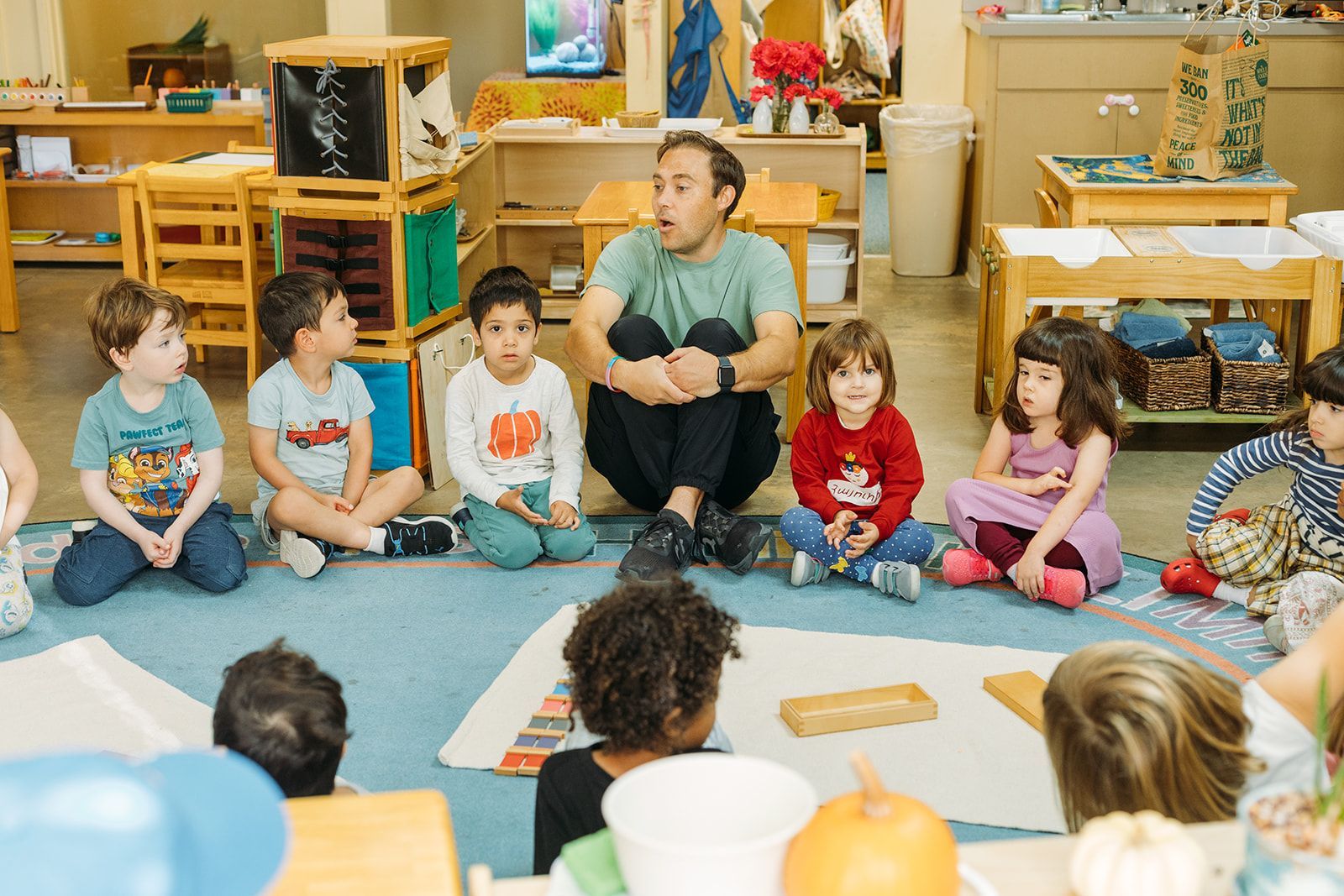
Storytelling is one of the oldest and most powerful ways children learn. Long before books existed, families shared stories to teach lessons, explain the world, and connect with one another. Today, research continues to show that storytelling plays a vital role in children’s learning, imagination, and emotional growth. 


Our brains naturally respond to stories. When children listen to a story, they don’t just hear words - they picture scenes, feel emotions, and make meaning. This is why stories help children remember information more easily and understand ideas more deeply than through facts alone.


Why Storytelling is So Important for Young Children


  • Builds strong listening skills
  • Strengthens memory and attention
  • Encourages imagination and creativity
  • Supports emotional understanding and empath
  • Helps children understand real-world situations
  • Boosts confidence in speaking and oral language


Through stories, children learn to recognize feelings, solve problems, and understand different perspectives - all essential life skills. Storytelling creates a warm, personal connection between the adult and child. With eye contact, gestures, and expressive voices, children feel truly engaged. Because there are no pictures, children use their own imagination to create the story in their minds, which builds creativity, listening skills, and emotional connection. 

Why Stories Stay with Us


Stories help children understand the world and their place in it. When adults share stories - real or imagined - children feel valued and connected. Storytime becomes more than learning; it becomes a moment of bonding, comfort, and joy. Storytelling also fosters curiosity and wonder, which are at the heart of lifelong learning.


How Families Can Support Storytelling at Home

  • Share stories from your own childhood
  • Make up silly or imaginative stories together
  • Let your child tell you their own stories
  • Talk about feelings and choices in stories
  • Enjoy reading books together every day


Every story you share helps build your child’s language, confidence, and love for learning. 


Storytelling is not just something we do - it is a part of who we are. When we tell stories to children, we pass along the gift of imagination, connection, and learning that has shaped humanity for generations. This is also the perfect time of year to enjoy family gatherings and share stories together. These moments - filled with laughter, memories and meaningful conversations - become treasures that children carry in their hearts for years to come. The stories shared today become the memories passed down tomorrow, from one generation to the next. 

By Regina Swerts January 5, 2026
By Regina Swerts, WRM Lower Elementary Guide Friday, January 16, 2026
By Kat Gamber December 12, 2025
Why Outdoor Education is Essential
By Jane Brass November 30, 2025
By Jane Brass, WRM Upper Elementary Guide Sunday, November 30, 2025
By Rob Lewicki October 23, 2025
By Rob Lewicki, Upper Elementary Guide Thursday, October 23, 2025
By Lisa Strykowski September 18, 2025
By Lisa Strykowski, Primary Guide Thursday, September 18, 2025
October 1, 2021
Maria Montessori based her entire educational philosophy on the idea that children developed through a series of four planes. Each of these planes is easy to recognize and has clear, defining characteristics. If we study and understand these stages, we can approach our interactions with children with a new perspective.
September 1, 2021
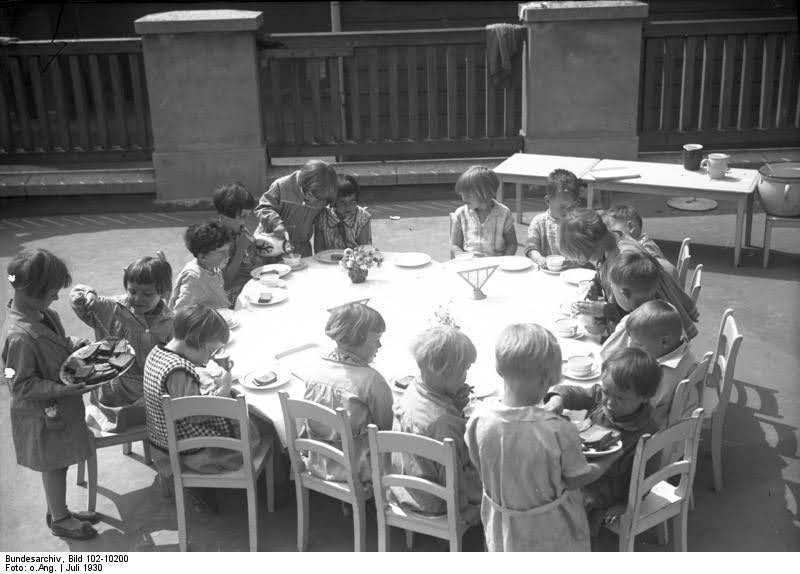
Infants and toddlers may be together or separate, with a toddler classroom serving children 18 months to three years. Primary classrooms are for children ages 3-6, with preschool and kindergarten-aged children together. The elementary years serve children ages 6-12; some schools separate into lower (6-9) and upper (9-12) elementary, while many split elementary into two groups. Even Montessori middle- and high-school students learn in multi-age classrooms. While Montessori is not the only type of education that utilizes this approach, it’s not what most people are used to. What are the benefits of structuring a classroom this way? Read on to learn more... Learning at an Individual Pace Children in multi-age classrooms tend to have a little more flexibility when it comes to mastering skills within a specific timeframe. We know that learning is not linear, and that learners have periods of significant growth, plateaus, and even the occasional regression. In multi-age classrooms, children are typically able to work at their own pace without the added pressure of keeping up with the whole group, or even being held back by the whole group. When children in a classroom range in ages, everyone has someone they can work with, regardless of their skill level. Children don’t feel left behind if they struggle with a concept, and they also don’t feel bored by repetition of something they have already mastered. Teachers who teach in multi-age classrooms typically have deep knowledge for a range of developmental abilities, leaving them well-equipped to differentiate instruction for each individual child. Building Stronger Relationships Traditionally children move from one class to the next each year. This means not only a new set of academic expectations, different routines, and different classroom structures, but a different teacher. In multi-age classrooms teachers have a longer period of time to get to know a student and their family, and vice versa. When teachers really get to know a student, they are able to tailor instruction in regards to both content and delivery. They know how to hook a specific child onto a topic or into a lesson. They know what kind of environment a child needs to feel successful. Parents have an opportunity to get to know teachers better this way, too. If your child has the same teacher for two or three years, the lines of communication are strengthened. Parents get to know the teacher’s style and expectations. The home to school connection becomes more seamless, and the biggest beneficiary is the child. Mentors and Leaders When a child spends multiple years in the same class they are afforded two very special opportunities. Children who are new to the class are fortunate enough to be surrounded by helpful peer mentors. Children often learn best from one another, and they seek to do so naturally. First and second year students watch as the older children enjoy advanced, challenging work, and this inspires them. They look to the older children for guidance, and the older children are happy to provide it. After a year or two in the same room, students have a chance to practice leadership skills. In Montessori classrooms, the older children are often seen giving lessons, helping to clean up spills, or reaching out a comforting hand to their younger friends. The best part is kids make the transition from observer to leader in their own time. It doesn’t happen for all children at the same time, but when it does it’s pretty magical to observe. Mirroring Real-Life There is no other area in life in which people are split into groups with others who are exactly their chronological age. Whether in the family, the workforce or elsewhere, people ultimately need to coexist with people older and younger than themselves. Doing so makes for a more enriching environment, replete with a variety of ideas and skills. Why not start the experience with young children in school? Moving On While staying in the same class for multiple school years has many benefits, a child will eventually transition into a new class. While this can feel bittersweet (for everyone involved!) children are typically ready when it is time. The Montessori approach is always considering what is most supportive of children depending on their development. When formulating how to divide children into groupings, Maria Montessori relied on her ideas about the Planes of Development. There are very distinctive growth milestones children tend to reach at about age 3, another set around age 6, and yet another at age 12. The groupings in our schools are intentional, and they give kids a chance to feel comfortable in their community, while also preparing them to soar forward when the time is right.