Raise a Reader

By Jane Brass, WRM Upper Elementary Guide

Sunday, November 30, 2025
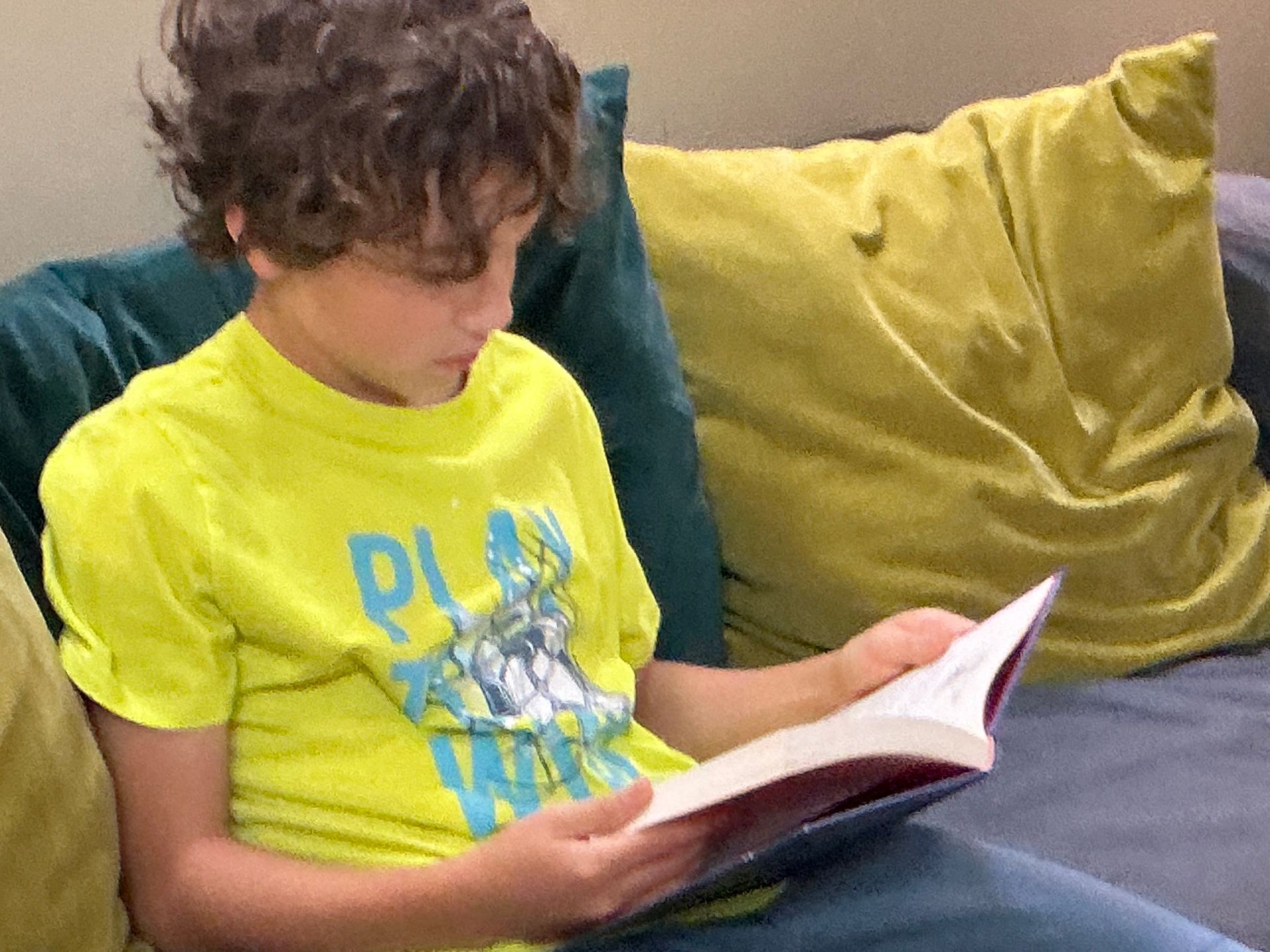
I started teaching in 1996, and I have one piece of advice for parents. Raise a bibliophile or, even better, a librocubiclist. Spend Saturdays at a bookstore or library with your child perusing new reading material. Help your child discover a diverse range of reading materials across various genres and formats. When planning a trip, be sure to add a visit to a bookstore or two to your itinerary. Have a To Be Read (TBR) pile on your bedside table, and help your children make their own TBR list or stack. Build reading into your bedtime routine. Keep an extensive, high-quality dictionary readily available in your home. Make lists of new words to look up. Reading not only builds vocabulary but also opens up worlds. Books and magazines introduce new ideas and possibilities. Stories build empathy and offer perspectives you might not have known existed. Reading actual pages changes your brain for the better. Unfortunately, not everyone knows the joys of reading.


According to the National Literary Institute based in Houston, 

  • As of 2024, 79% of U.S. adults nationwide are literate.
  • In 2024, 21% of adults in the US were illiterate.
  • 54% of adults have a literacy below a 6th-grade level (20% are below 5th-grade level).

Reading as a habit is on the decline in America. Gallup reported that Americans say they read an average of 12.6 books in 2022, a smaller number than Gallup has measured in any prior survey dating back to 1990. U.S. adults are reading roughly two or three fewer books per year than they did between 2001 and 2016. However, reading for pleasure is the single most significant factor for your child’s future academic success.  
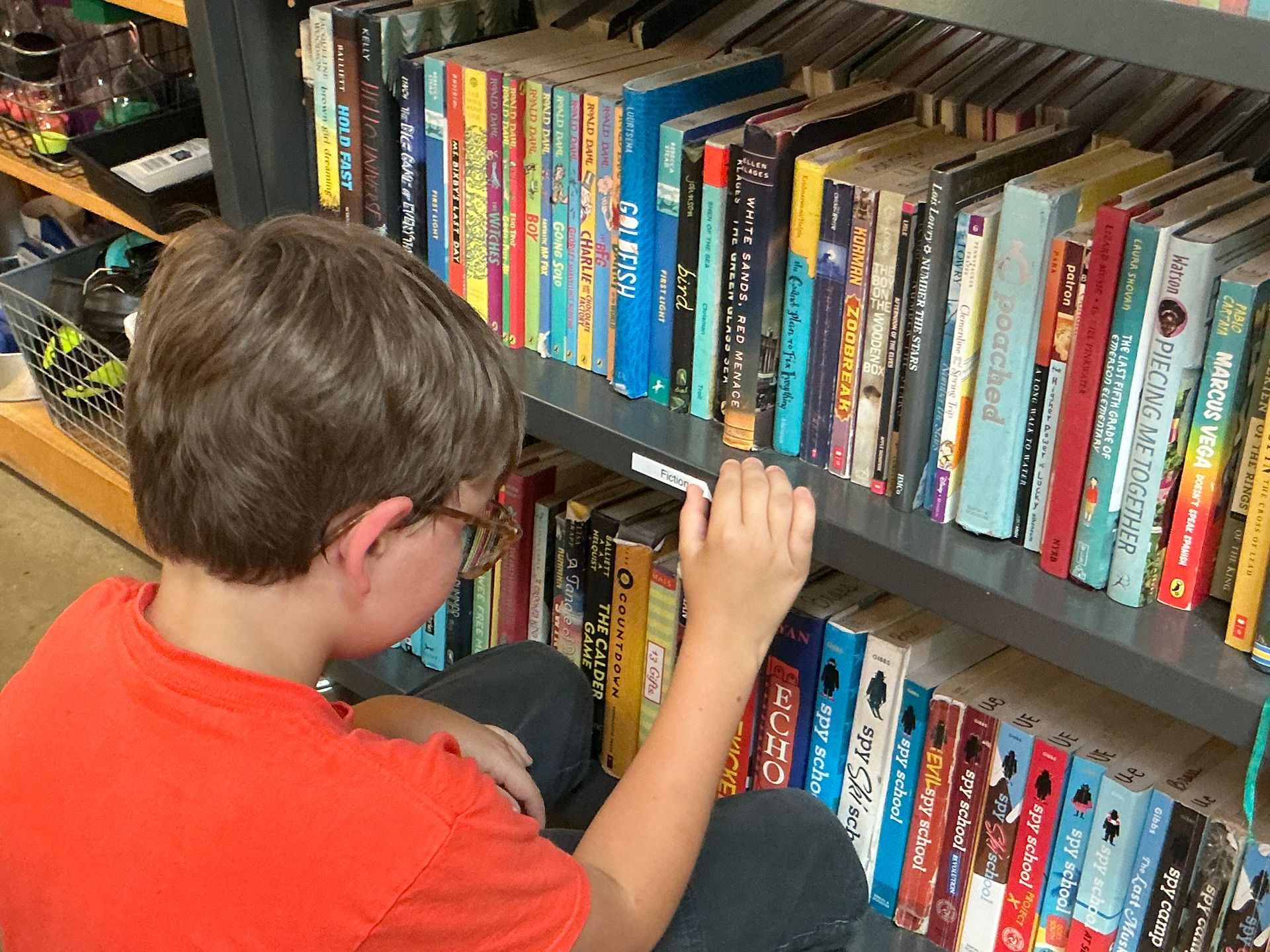
Start reading to your kids before they can walk or even talk, because a child’s reading habits start earlier than you might think. Families influence a child’s reading habits by nurturing them through reading with the child and modeling the importance of making time for reading daily from a very young age. Not only do children need to read with you daily, but they also need to see the adults in their lives reading. (This not only includes parents, but older siblings, grandparents, and other relatives or close friends of the family.) Children need to see you not only model the joy of reading, but also hear you use tone, inflection, and even struggle to pronounce new and complex words, to know it's okay to stumble and figure out words or context. 


Colleges have learned that inquiring about reading habits during the interview process is an effective way to get to know potential students. They are impressed when an applicant reads for fun because so few applicants have this habit. By the time a child enters the Upper Elementary classroom, those with a reading habit stand out. I can tell you with certainty that the children in the Upper Elementary classroom who are book-bosomed and freely pursue text have a richer vocabulary, write more prolifically, and achieve higher test scores than their peers. They are more likely to think deeply and process information quickly. Even if your child has reading challenges, you can raise a bookish child. Start reading to them and show them how to make time for reading. Help your child learn who they are as a reader by sharing a variety of reading material. Show them that you value reading.
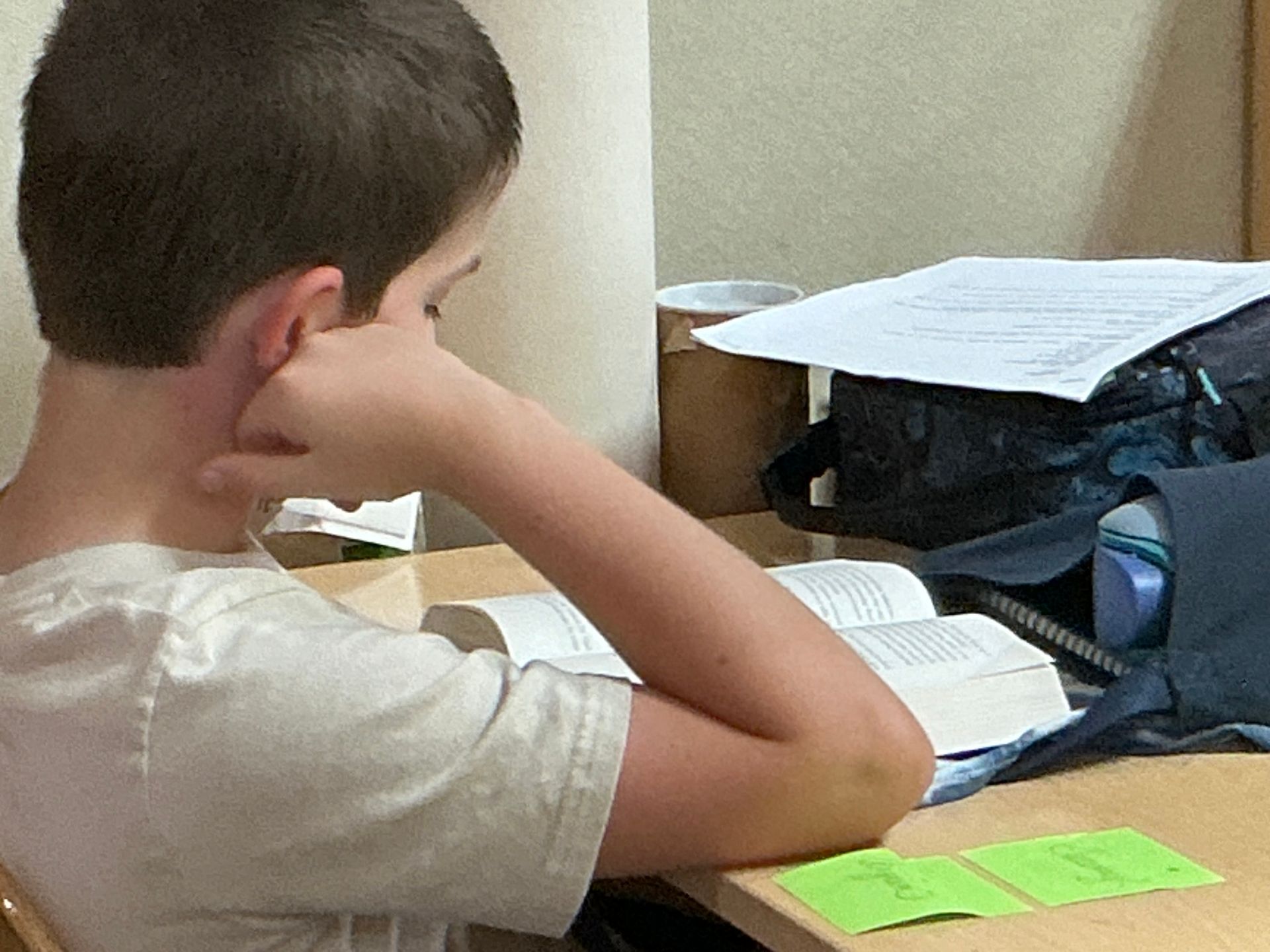
Keep reading to your child even after they “learn to read” on their own. Read our UE September Newsletter for book recommendations for older readers.  Visit your local library for other book recommendations.


Ms. Brass’ Book Recommendations for Young Children


The Very Hungry Caterpillar by Eric Carle* 


Where the Wild Things Are by Maurice Sendak


There’s a Monster at the End of This Book by Jon Stone


Doggies by Sandra Boynton


Charlotte’s Web by E. B. White


Clementine series by Sarah Pennymaker


A Bear Called Paddington by Michael Bond


Rigsby by Beverly Cleary*


Socks by Beverly Cleary


Chicken Sunday by Patricia Polacco*


Winnie-the-Pooh by A.A. Milne


Geronimo Stilton series by Geronimo Stilton


*I love all books by these authors.


Words for book lovers:

  • Bibliophile: A lover of books.
  • Bookish: Fond of or devoted to reading.
  • Librocubiculist: A person who reads books in bed.
  • Logophile: A lover of words.
  • Bouquiniste: A dealer in secondhand books, or a book-hunter.
  • Book-bosomed: Carrying a book at all times.
  • Lectionophilia: A neologism for the love of reading. 


Words for the act of reading?

  • Peruse: To read in a careful and thorough way.
  • Pore (over): To read or study with intense concentration.
  • Scan: To examine or read something quickly.
  • Reread: To read again.
  • Bibliotherapy: The use of reading materials for help in solving personal problems. 
By Rob Lewicki October 23, 2025
By Rob Lewicki, Upper Elementary Guide Thursday, October 23, 2025
By Katie Catron October 16, 2025
Click to view the Thursday Update for October 16, 2025.
By Katie Catron October 9, 2025
Click to view the Thursday Update for October 9, 2025.
By Lisa Strykowski September 18, 2025
By Lisa Strykowski, Primary Guide Thursday, September 18, 2025
October 1, 2021
Maria Montessori based her entire educational philosophy on the idea that children developed through a series of four planes. Each of these planes is easy to recognize and has clear, defining characteristics. If we study and understand these stages, we can approach our interactions with children with a new perspective.
September 1, 2021
Infants and toddlers may be together or separate, with a toddler classroom serving children 18 months to three years. Primary classrooms are for children ages 3-6, with preschool and kindergarten-aged children together. The elementary years serve children ages 6-12; some schools separate into lower (6-9) and upper (9-12) elementary, while many split elementary into two groups. Even Montessori middle- and high-school students learn in multi-age classrooms. While Montessori is not the only type of education that utilizes this approach, it’s not what most people are used to. What are the benefits of structuring a classroom this way? Read on to learn more... Learning at an Individual Pace Children in multi-age classrooms tend to have a little more flexibility when it comes to mastering skills within a specific timeframe. We know that learning is not linear, and that learners have periods of significant growth, plateaus, and even the occasional regression. In multi-age classrooms, children are typically able to work at their own pace without the added pressure of keeping up with the whole group, or even being held back by the whole group. When children in a classroom range in ages, everyone has someone they can work with, regardless of their skill level. Children don’t feel left behind if they struggle with a concept, and they also don’t feel bored by repetition of something they have already mastered. Teachers who teach in multi-age classrooms typically have deep knowledge for a range of developmental abilities, leaving them well-equipped to differentiate instruction for each individual child. Building Stronger Relationships Traditionally children move from one class to the next each year. This means not only a new set of academic expectations, different routines, and different classroom structures, but a different teacher. In multi-age classrooms teachers have a longer period of time to get to know a student and their family, and vice versa. When teachers really get to know a student, they are able to tailor instruction in regards to both content and delivery. They know how to hook a specific child onto a topic or into a lesson. They know what kind of environment a child needs to feel successful. Parents have an opportunity to get to know teachers better this way, too. If your child has the same teacher for two or three years, the lines of communication are strengthened. Parents get to know the teacher’s style and expectations. The home to school connection becomes more seamless, and the biggest beneficiary is the child. Mentors and Leaders When a child spends multiple years in the same class they are afforded two very special opportunities. Children who are new to the class are fortunate enough to be surrounded by helpful peer mentors. Children often learn best from one another, and they seek to do so naturally. First and second year students watch as the older children enjoy advanced, challenging work, and this inspires them. They look to the older children for guidance, and the older children are happy to provide it. After a year or two in the same room, students have a chance to practice leadership skills. In Montessori classrooms, the older children are often seen giving lessons, helping to clean up spills, or reaching out a comforting hand to their younger friends. The best part is kids make the transition from observer to leader in their own time. It doesn’t happen for all children at the same time, but when it does it’s pretty magical to observe. Mirroring Real-Life There is no other area in life in which people are split into groups with others who are exactly their chronological age. Whether in the family, the workforce or elsewhere, people ultimately need to coexist with people older and younger than themselves. Doing so makes for a more enriching environment, replete with a variety of ideas and skills. Why not start the experience with young children in school? Moving On While staying in the same class for multiple school years has many benefits, a child will eventually transition into a new class. While this can feel bittersweet (for everyone involved!) children are typically ready when it is time. The Montessori approach is always considering what is most supportive of children depending on their development. When formulating how to divide children into groupings, Maria Montessori relied on her ideas about the Planes of Development. There are very distinctive growth milestones children tend to reach at about age 3, another set around age 6, and yet another at age 12. The groupings in our schools are intentional, and they give kids a chance to feel comfortable in their community, while also preparing them to soar forward when the time is right.